Choosing deck boards is one of the first big decisions in a deck project. It shapes how the deck looks, how much upkeep it needs, and how it holds up to Colorado weather.
What Colorado weather does to a deck
- Strong sun. At high elevation, sunlight is more intense. Over time it fades color and dries out wood.
- Dry air and big temperature swings. Wood shrinks and swells as conditions change, which can lead to cracks, splits, and boards that cup or warp.
- Snow and freeze-thaw. Water that soaks into a board and then freezes can work its way into cracks and around fasteners. Good spacing and drainage help.
Wood decking
Pressure-treated lumber usually costs the least up front and is a common choice for both decking and framing. Cedar and redwood are chosen for their color and grain.
Every wood deck needs regular care: cleaning, plus a stain or sealer reapplied every few years. Decks that face south or west, or sit in full sun all day, usually need it more often.
Wood can be a good fit if you like the look of natural wood, want a lower starting cost, and don’t mind the upkeep.
Composite and PVC decking
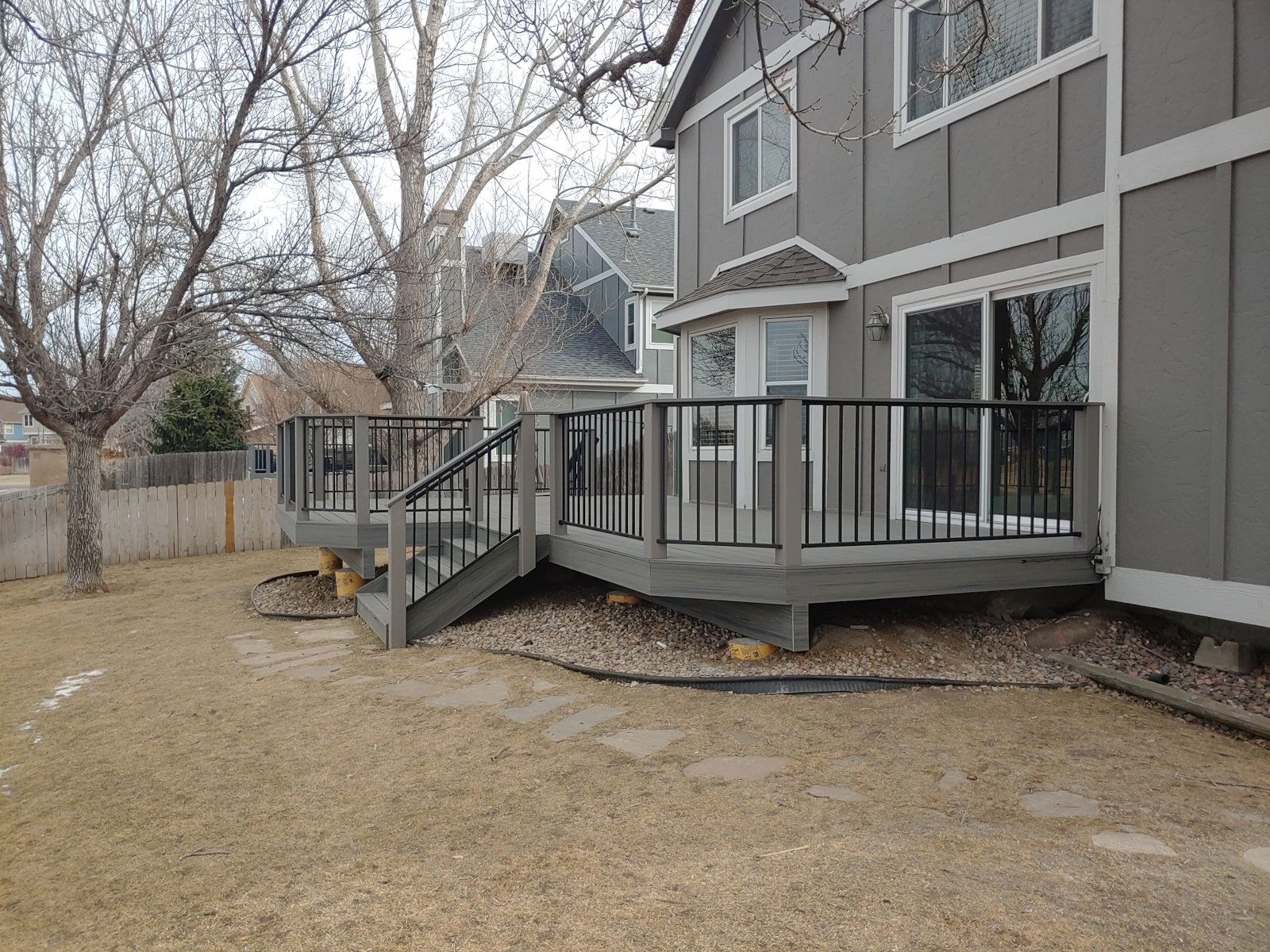
Composite boards combine wood fibers and plastic. PVC boards are all plastic. Both cost more up front, but neither needs staining or sealing, just occasional cleaning.
A few things to know:
- Boards can get hot in direct sun, especially darker colors. Look at samples outside before you decide.
- Quality varies between product lines. Boards with a protective outer shell, often called capped boards, generally resist stains and fading better.
- Each manufacturer sets its own requirements for board spacing, fasteners, and joist spacing. Following them protects the warranty.
The frame matters either way
The boards you walk on sit on a frame of posts, beams, and joists, which is usually pressure-treated lumber even under composite decking. If you’re replacing the boards on an older deck, the condition of that frame decides whether it can be reused.
Questions that help you decide
- How much time do you want to spend on maintenance each year?
- How long do you plan to stay in the home?
- How much direct sun does the deck get, and at what time of day?
- What will you use it for: dining, kids, pets, a hot tub?
- What’s the budget, counting upkeep over the life of the deck and not just the materials?
If you’re weighing your options, request a free estimate and Jim can talk through wood and composite choices for your space. You can also read more about our custom decks and patios.